Labour camp accommodation be expanded later
When planning workforce housing, one of the most common questions asked by companies and project managers is: can labour camp accommodation be expanded later? This question is particularly relevant for large-scale projects where workforce needs may fluctuate over time. Understanding the flexibility of labour camp accommodation is essential for budgeting, project planning, and ensuring worker satisfaction throughout the lifecycle of a project. Expansion potential allows companies to adapt to changing requirements without incurring excessive costs or delays, making it a critical consideration from the outset.
Labour camp accommodation is generally designed with modularity in mind, especially in industries such as construction, mining, and oil and gas. Modular designs allow camps to be scaled up or down depending on workforce demands. For example, prefabricated units can be added to existing camps to accommodate more workers without disrupting ongoing operations. This approach provides flexibility while maintaining safety standards and operational efficiency. Companies increasingly prefer modular labour camp accommodation because it minimizes downtime and allows for phased growth aligned with project timelines.
Another factor that makes labour camp accommodation expandable is land availability. Camps built on larger plots of land can allow additional units to be constructed as the workforce grows. Conversely, camps on limited plots may face constraints, making expansion more complicated and expensive. When considering whether labour camp accommodation can be expanded later, evaluating available land, zoning regulations, and site accessibility is crucial. Companies often plan for future growth by securing additional land adjacent to the initial camp site, ensuring that expansion can be executed smoothly when required.
Infrastructure and utility planning also play a pivotal role in the expandability of labour camp accommodation. Properly designed water supply, sewage, electricity, and communication networks can handle additional units without requiring major overhauls. If these systems are not designed with expansion in mind, adding more accommodation may require costly upgrades. Therefore, forward-thinking engineers and planners focus on scalable infrastructure from the very beginning to ensure that future expansion is feasible and cost-effective.
labour camp accommodation can also be expanded vertically or horizontally, depending on the type of units used. Single-story modular units can be arranged side by side to increase capacity, while multi-story units can add more workers without requiring additional land. Vertical expansion, however, requires careful consideration of structural integrity, safety codes, and accessibility. Horizontal expansion is generally simpler but may be limited by site constraints. These strategies allow companies to tailor expansion plans to their specific site conditions and workforce requirements.
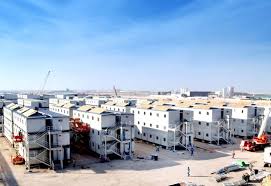
Can labour camp accommodation be expanded later?
Regulatory and legal requirements are another important factor when considering whether labour camp accommodation can be expanded later. Different regions have varying building codes, fire safety regulations, and occupancy limits that must be followed. Compliance with these regulations is essential to avoid penalties and ensure worker safety. Before planning any expansion, it is advisable for companies to consult local authorities and obtain necessary permits to prevent delays and legal complications. Regulatory compliance also ensures that expanded accommodation maintains the same standards of comfort and safety as the original camp.
Labour camp accommodation expansion is often influenced by budget considerations. While the cost of expanding an existing camp is generally lower than building a new one from scratch, it still requires significant investment. Companies must account for construction materials, labor costs, utility upgrades, and additional amenities. Strategic planning can help balance expansion costs with anticipated increases in workforce demand, ensuring that the investment remains economically viable. Phased expansion is often the preferred approach, allowing costs to be spread over time while meeting immediate accommodation needs.
Flexibility in design also contributes to the ability of labour camp accommodation to be expanded later. Some camps use lightweight, modular, or portable units that can be moved, repurposed, or upgraded as requirements change. This flexibility not only facilitates expansion but also allows camps to adapt to evolving safety standards and worker preferences. Companies that prioritize flexible design can respond quickly to workforce growth, seasonal demands, or project changes without major disruptions.
Labour camp accommodation can be further optimized during expansion by incorporating additional facilities such as dining halls, recreational areas, or healthcare units. Expanding only sleeping quarters may not be sufficient if additional workers increase the demand on shared amenities. Comprehensive planning ensures that all aspects of the camp, including utilities, social spaces, and safety measures, grow in tandem with accommodation units. This approach maintains a high quality of life for workers and supports sustained productivity.
In conclusion, the question of whether labour camp accommodation can be expanded later is largely dependent on initial planning, design flexibility, infrastructure scalability, and regulatory compliance. With proper foresight, most camps can be scaled to meet growing workforce demands through modular designs, phased construction, and strategic land use. Companies that incorporate these considerations early in the planning process can expand accommodation efficiently, safely, and cost-effectively. By anticipating future needs and building camps with expansion in mind, organizations not only optimize resources but also provide a better living environment for workers, ensuring the long-term success of their projects.

+ There are no comments
Add yours