exchange for AI agents facilitate
An exchange for AI agents can indeed facilitate collaboration between AI systems, opening new possibilities for more efficient, intelligent, and scalable problem-solving. In an exchange for AI agents, multiple autonomous agents interact within a shared environment, communicating and coordinating their actions to achieve common or complementary goals. This framework serves as a foundation for collaborative AI, where the strengths of individual agents are combined to produce better overall outcomes than any single agent could achieve alone.
One of the primary ways an exchange for AI agents facilitates collaboration between AI systems is by enabling seamless communication. AI agents often come from different developers, operate with diverse architectures, or specialize in distinct tasks. An exchange acts as a neutral platform where these heterogeneous agents can share data, signals, or messages through standardized protocols, allowing them to understand and respond to one another. This communication is essential for coordinating efforts, sharing knowledge, and negotiating roles within collaborative tasks.
Moreover, an exchange for AI agents supports dynamic task allocation, which is vital for effective collaboration. In many scenarios, tasks can be decomposed into smaller sub-tasks that different agents can handle simultaneously or sequentially. The exchange helps assign these tasks based on the agents’ capabilities, availability, and current workloads, ensuring that resources are used optimally. For example, in a smart manufacturing environment, an exchange might coordinate AI agents controlling robotic arms, quality inspection systems, and logistics management to work together smoothly, improving efficiency and reducing downtime.
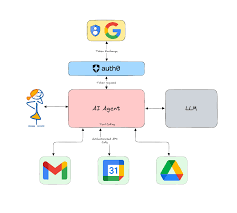
Can exchange for AI agents facilitate collaboration between AI?
The collaborative potential of an exchange for AI agents also stems from its ability to facilitate learning and adaptation. When AI agents share experiences and data within the exchange, they can collectively improve their models through collaborative learning techniques. This shared knowledge enhances each agent’s ability to make decisions, predict outcomes, and respond to changes in the environment. As a result, the entire network of agents becomes more resilient and capable, adapting faster to new challenges than isolated systems.
In addition, exchanges for AI agents often incorporate conflict resolution and consensus-building mechanisms. When multiple agents have overlapping goals or conflicting interests, the exchange provides protocols and frameworks to negotiate compromises or reach agreements. These mechanisms ensure that collaboration remains productive and stable, preventing disputes from degrading system performance. Such conflict resolution is crucial in multi-agent systems used in fields like autonomous vehicle coordination or distributed energy management, where competing agents must still cooperate safely and efficiently.
Security and trust are other important aspects that an exchange for AI agents addresses to facilitate collaboration. Since agents in the exchange may operate in sensitive or high-stakes domains, ensuring that communications are secure and that agents behave reliably is paramount. The exchange can implement authentication, encryption, and monitoring to create a trusted environment where AI agents can collaborate without the risk of malicious interference or data breaches.
Furthermore, scalability is a significant advantage offered by an exchange for AI agents in fostering collaboration. As the number of AI agents grows, managing direct interactions between each pair of agents becomes impractical. An exchange provides a scalable infrastructure that supports many-to-many interactions efficiently, allowing large networks of AI agents to collaborate in real-time without bottlenecks.
In conclusion, an exchange for AI agents plays a crucial role in facilitating collaboration between AI systems by providing a platform for communication, task coordination, shared learning, conflict resolution, security, and scalability. This collaborative framework unlocks new levels of intelligence and functionality, enabling AI agents to work together toward common goals and tackle complex problems more effectively than ever before. As AI continues to advance, such exchanges will be instrumental in driving the future of interconnected, cooperative AI ecosystems.

+ There are no comments
Add yours